
Legal Compliance for Car Stickers in Dubai: What You Need to Know
Car stickers Dubai must adhere to specific legal requirements to ensure compliance and avoid costly penalties. The rules governing these stickers fall under Federal Traffic Law No. 21 of 1995 and Ministerial Resolution No. 178 of 2017. These regulations clearly state that all stickers must receive prior approval from the Roads and Transport Authority (RTA). This approval is necessary for both personal and commercial use.
Placing car stickers without this approval is not just a minor infraction. It can lead to substantial fines, which can reach up to AED 500 (approximately USD 136) daily, and in severe cases, potential imprisonment. Therefore, understanding these legal requirements is crucial not only to avoid penalties but also to ensure vehicle safety on the road.
Key Takeaways
- All car stickers require RTA approval before placement.
- Fines for unauthorized stickers can accumulate daily.
- Compliance enhances road safety and reduces legal risks.
- Review RTA guidelines diligently to avoid design rejection.
- Documentation may be needed if stickers serve an advertising purpose.
What Is Required for Approval?
To obtain approval for your car sticker, you will need to follow a few clear steps:
- Submit a Complete Design: Prepare and submit your design to the RTA for thorough review. This should include all visual elements that will appear on the sticker.
- Check Visibility Standards: Ensure that your design complies with regulations regarding visibility. Specifically, it should not impede the driver’s line of sight, which is critical for safe driving. Stickers covering windows, mirrors, or any area that obstructs visibility are prohibited.
- Documentation Requirement: If your sticker serves an advertising purpose, provide supporting documentation detailing its intended use. This may involve a trade license or other relevant paperwork depending on your business type.
Common Mistake: Many individuals fail to follow RTA guidelines, leading to design rejections. Imprecise or incomplete submissions can end up costing not just time but also money in potential fines. Always confirm that your design adheres to RTA standards before submission. You can find more about the essential requirements in our article on eco-friendly sticker printing, which discusses how to combine compliance with sustainability.
Close up view of a vehicle showing legal sticker placement on the rear bumper and side window
Car Sticker Placement Rules in Dubai: Ensuring Safety and Compliance
Car stickers Dubai come with strict placement rules to prioritize safety and legal compliance. Stickers must not obstruct the driver’s visibility or cover number plates. Legal placements include areas such as the rear bumper, rear side windows (or quarter glass), and body panels like doors. Adhering to these guidelines is crucial; any misplacement could result in penalties and increase the risk of accidents due to impaired visibility.
Consider both aesthetics and functionality when placing stickers. They should enhance your vehicle’s look without distracting other drivers. Stickers placed on windshields or obstructive surfaces are strictly prohibited, in alignment with UAE vehicle sticker rules.
Key Takeaways
- Stickers must not cover number plates under any circumstances.
- Always ensure that stickers do not obstruct the driver’s line of sight.
- Reflective stickers are required for heavy vehicles for better visibility at night.
- Never place stickers on windshields or front side windows unless approved by the RTA.
- Regularly confirm compliance with the latest Dubai car sticker regulations.
Key Placement Rules
- Do not cover the number plate under any circumstances.
- Ensure that stickers do not obscure the driver’s line of sight. This is essential for the safety of both the driver and other road users.
- Reflective stickers are mandated for heavy vehicles to improve visibility during nighttime driving. This rule is enforced to help prevent accidents.
- Avoid placing stickers on windshields or front side windows unless explicitly permitted by the RTA. These placements can distract drivers and violate car sticker compliance Dubai.
What to Avoid: Misplaced stickers can lead to fines and may cause accidents due to impaired visibility. Always double-check your sticker placement against the latest RTA regulations before applying them to your vehicle. For further insight on proper placement, consider reading How to Boost Your Brand with Custom Stickers in Dubai.
Best Material Practices for Car Stickers: Choosing Wisely
Car stickers Dubai play a significant role in promotion and branding, but the type and quality of materials used are critical in ensuring their longevity and compliance with UAE regulations. In Dubai, where temperatures can reach extreme highs, selecting materials that can withstand harsh climatic conditions is essential to maintaining both appearance and effectiveness.
Cast vinyl is the gold standard for outdoor applications, boasting a lifespan of 5-10 years under normal conditions. Unlike alternatives such as calendered vinyl, cast vinyl performs exceptionally well against harsh UV rays and high heat typical in the UAE. This makes it a smart investment for anyone looking to enhance their vehicle’s branding without continuous replacement costs.
Key Takeaways
- Cast vinyl offers superior durability, lasting up to 10 years under ideal conditions.
- Higher quality materials prevent fading and premature peeling.
- UV-resistant materials help maintain vibrant colors over time.
- Avoiding poor quality options can save costs and reduce hassle in the long term.
- Always consider the climate when selecting sticker materials.
Material Selection Criteria
- Choose cast vinyl over calendered vinyl for superior durability. Cast vinyl’s molecular structure allows it to stretch over vehicle curves without splitting or peeling, unlike calendered vinyl, which is prone to shrinkage.
- Avoid PET film, as it can leave adhesive residues and typically does not adhere well to vehicle surfaces. This can cause issues when stickers are removed, leading to damage or extra cleaning costs.
- Opt for UV-resistant materials to prevent fading and ensure the sticker remains vibrant over time. Direct sunlight can quickly deteriorate lower-quality materials, which leads to a need for more frequent replacements.
Application and Maintenance Tips
To maximize the longevity of your car stickers, consider the following tips:
- Ensure proper surface preparation before applying stickers. This includes washing the area with soap and water followed by isopropyl alcohol to remove oils and dirt.
- Apply stickers during optimal temperature conditions, ideally between 10°C and 32°C. Applications on excessively hot or cold surfaces can lead to poor adhesion.
- After application, allow at least 24 hours before washing the vehicle to ensure the adhesive bonds properly.
Common Mistake: Selecting lower-quality materials to save costs can lead to premature peeling and fading. Always invest in durable, high-quality options for your car stickers to save money and hassle in the long run. Remember, spending a little more upfront can prevent repeated expenses later. For additional information on effective sticker solutions, consider exploring 5 Essential Tips for Top-Quality Sticker Printing in Dubai and The Ultimate Guide to Sticker Printing Materials in Dubai.
Common Mistakes in Car Sticker Compliance: What to Avoid
Car stickers Dubai can enhance branding and personal expression, but vehicle owners often encounter pitfalls due to a lack of awareness regarding specific regulations. Simple mistakes can lead to hefty fines and legal complications, making it essential to be informed. Unauthorized decorative or promotional stickers can incur daily penalties, often amounting to AED 500 (approximately USD 136) just for displaying non-compliant designs. The penalties can accumulate quickly, especially if the sticker is not addressed immediately.
Small stickers, such as those applied casually without consideration for local laws, can also result in fines. It’s crucial to understand that even a tiny design might obstruct visibility or break RTA guidelines, placing an additional financial burden on vehicle owners. Staying informed about what qualifies as a compliant sticker is vital for avoiding such issues.
How to Avoid Compliance Issues
- Seek RTA Approval: Always obtain prior approval from the Roads and Transport Authority (RTA) before placing any sticker on your vehicle. You can submit your designs for review to ensure they meet all legal requirements.
- Adhere to Visibility Guidelines: Double-check that your sticker placements do not obstruct the driver’s line of sight, number plates, or any other visibility criteria specified by the RTA. Stickers should only be applied to acceptable areas such as rear bumpers or side windows.
- Document Approvals: Keep a record of your RTA approvals in the vehicle. This not only serves as proof during inspections but also helps to clarify any potential misunderstandings with law enforcement.
Pro Tip: Familiarize yourself with recent changes to the UAE vehicle sticker rules and regulations to stay updated. Regularly checking local guidelines will help you avoid misunderstandings and potential pitfalls related to allowable sticker designs and placements.
Installing stickers can enhance your vehicle’s branding and aesthetic appeal. However, poorly placed stickers or those lacking appropriate approvals can lead to significant penalties. By following the outlined steps, you can maintain compliance and enjoy the benefits of car stickers without the stress of legal issues.
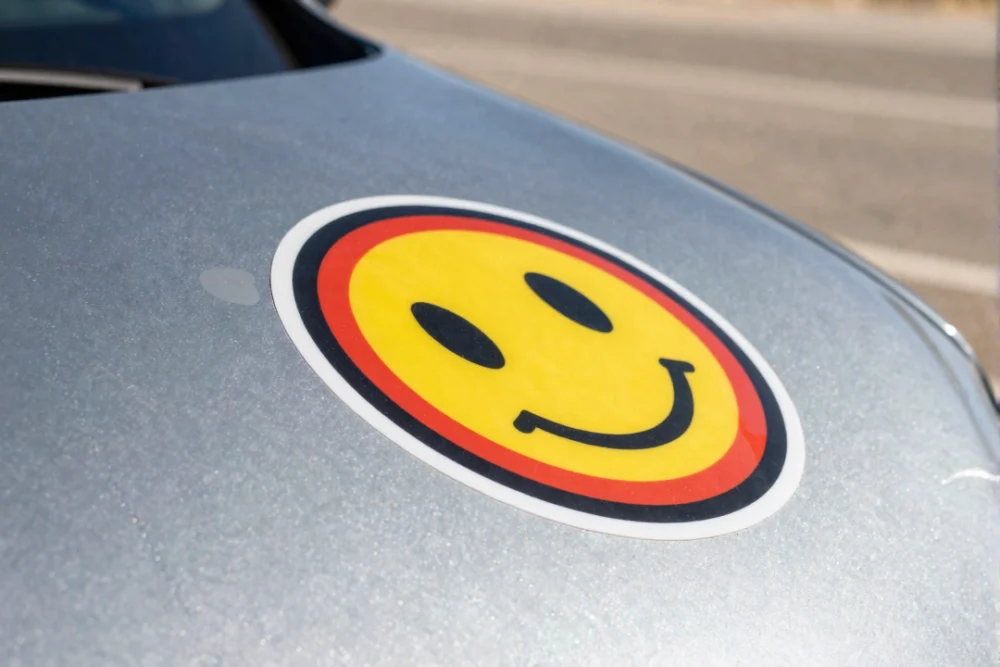
A high quality UV resistant vinyl sticker maintains its vibrant color and finish under the intense Dubai sun
A Vendor Brief Checklist for Car Sticker Compliance
When planning to order car stickers Dubai, use the following checklist to ensure compliance with all regulations. This comprehensive guide will help you navigate the necessary steps to avoid fines and ensure your car stickers are not only eye-catching but also legally compliant.
Key Takeaways
- Always seek RTA approval before applying any stickers.
- Use high-quality, UV-resistant materials to extend the lifespan of your stickers.
- Verify placement according to RTA standards to avoid visibility issues.
- Keep all necessary documentation within the vehicle to facilitate inspections.
| Checklist Item | Description |
|---|---|
| Seek RTA Approval | Before ordering your car stickers, ensure to submit your sticker designs to the Roads and Transport Authority (RTA) for compliance and approval. This step is crucial as placing car stickers without authorization is illegal and can lead to fines between AED 500 (approximately USD 136) and higher. |
| Material Quality | Use only high-quality materials for your stickers. Opt for cast vinyl as it is the best choice for outdoor use, lasting between 5-10 years and effectively resisting UAE’s high temperatures. Using low-quality materials may lead to fading, peeling, or damage to your vehicle’s finish. |
| Placement Confirmation | Verify that your intended sticker placements adhere to legal guidelines established by the RTA. Stickers should be positioned on surfaces like the rear bumper and side windows, ensuring that they do not obstruct the driver’s view or cover the number plate. Always double-check the car sticker placement rules Dubai to ensure compliance. |
| Documentation | It is essential to keep all relevant RTA approval documents on hand within your vehicle. This will facilitate inspections and ensure that you are prepared in case any traffic and safety officials request to see your compliance documents. |
Frequently Asked Questions
Are car stickers legal in Dubai?
In the UAE, placing car stickers without prior approval is illegal, applying to both personal and commercial stickers.
How to get approval for car stickers in Dubai?
RTA approval is possible for adding stickers on a car, and approved stickers can be entered in the Mulkiya (vehicle registration card).
What are the rules for car sticker placement in Dubai?
Stickers must not cover number plates, block visibility, or distract other drivers, as per Federal Traffic Law No. 21 of 1995 and Ministerial Resolution No. 178 of 2017.
What are the fines for unauthorized car stickers in Dubai?
The fine for unauthorized car stickers is AED 500 per day, and repeat violations may result in black points on the driver’s license or imprisonment in severe cases.
Are reflective stickers mandatory on heavy vehicles in Dubai?
Yes, reflective stickers are mandatory on the rear of heavy vehicles to improve night visibility, with a fine of AED 500 for failure to display them.
Can I put promotional stickers on my car in Dubai?
No, unauthorized decorative or promotional stickers can result in daily penalties, and advertising is only permitted on vehicles registered in the UAE with a valid permit.