
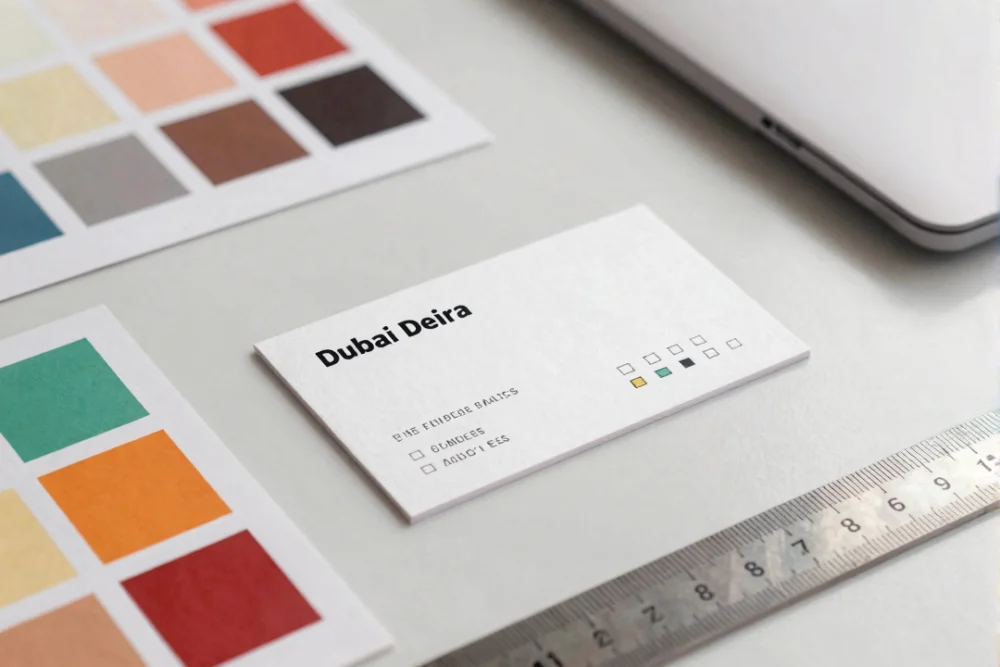
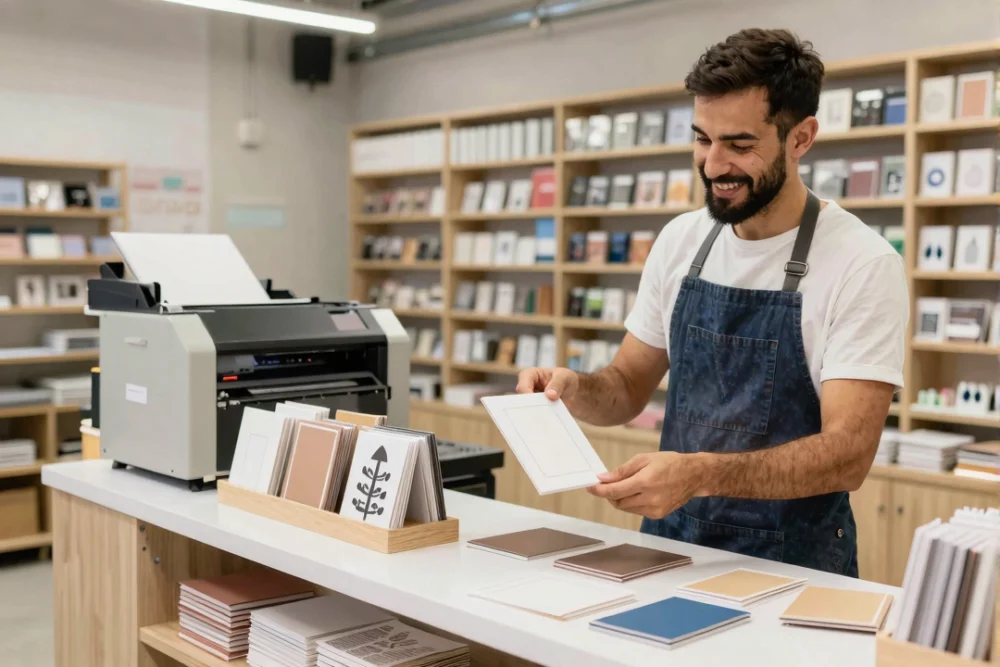
A Dubai Deira print technician shows an entrepreneur premium card samples and finishes
Start With the Right Goal for business card printing dubai deira
business card printing dubai deira works best when you choose a partner who can deliver clean, consistent cards that fit your brand, budget, and timeline. A business card still plays a real role in first impressions, so print quality and finish affect how people read your brand in person. You want a vendor who can guide paper, finish, and file prep without delays or reprints, especially when you need quick turnaround in Dubai.
Use this guide to make a clear vendor choice, avoid costly mistakes, and submit a brief that speeds production while protecting quality. The goal is simple: get reliable business cards that make your brand look professional and help people act on your contact details.
Key Takeaways
- Pick a Deira print partner based on quality controls, turnaround, and proofing, not price alone.
- Match the printing method to volume and urgency: digital for fast short runs, offset for bulk, letterpress for premium.
- Use print-ready files: CMYK, 300 dpi, and correct bleed and safe areas.
- Choose materials and finishes based on how the card will be used and handled.
- Use a clear vendor brief to reduce back-and-forth and speed delivery.
Define the Card’s Job Before You Choose a Vendor
What it is: A business card is a compact marketing tool that carries brand identity and direct contact details. It is not just a piece of paper.
Why it matters: Strong print quality and the right materials increase credibility and help people remember you after a meeting. This is true for business card printing in dubai because people still rely on quick, face-to-face exchanges in many industries.
How to do it: Decide the card’s main purpose before you talk to any vendor. Is it for high-volume networking, premium client meetings, or on-the-spot referrals? That purpose shapes the stock, finish, and printing method you should select.
What to avoid: Do not treat printing as an afterthought. Skipping a clear purpose leads to low-impact cards that get ignored.
Tip: If your team is not aligned, write one sentence that states the card’s main goal and share it with the printer during the briefing stage.
Common mistake and fix: Many buyers order cards with no clear call-to-action. Avoid this by adding one simple action such as “Book a consult” or “Save this contact.”
Decision check: If you cannot describe who will receive the card and what you want them to do, pause before selecting materials or finishes. A clear purpose keeps your business cards in dubai focused and effective.
Decide Which Vendor Type Fits Deira Buyers
What it is: Print vendors in Dubai generally fall into online-only budget printers, large industrial printers, or full-service commercial printers.
Why it matters: Each model affects support, customization, and consistency. For SMEs, a full-service commercial printer often provides the best balance of quality, guidance, and turnaround.
How to do it: Shortlist vendors with strong portfolios and clear service ranges, then request samples or proofs. If you need rapid turnaround, consider a local Deira partner to reduce delivery delays and improve communication, especially when you are finding suppliers near me.
What to avoid: Do not choose a vendor based only on low price. It often results in inconsistent quality and limited support.
Tip: Ask how they handle file reviews and proofs before you commit to a large order. This is critical for business card print dubai orders that need fast delivery.
Common mistake and fix: Buyers skip sample checks and end up with poor quality. Avoid this by asking for a printed sample or hard proof before bulk production.
Check for Quality Signals and Standards
What it is: Certifications and quality management systems show that a printer follows consistent processes.
Why it matters: Standards-based printing reduces color mismatch and improves repeatability across batches. It also supports better waste handling and environmental practices.
How to do it: Ask whether the vendor follows recognized process and quality standards, and how they control waste and environmental impact. If your brand values sustainability, confirm if they offer recycled stock and eco-friendly inks.
What to avoid: Do not assume all printers use consistent color management.
Tip: If your brand relies on exact colors, request a hard proof and confirm how they match proofs to final prints.
Common mistake and fix: Buyers ignore color management and get off-brand colors. Avoid this by confirming proofing and color standards in writing.
Acceptance criteria: A quality-focused vendor should explain how they manage proof-to-print consistency and how they handle reprints if colors do not match the approved proof.
Pick the Right Printing Method for Speed and Volume
What it is: Business cards use digital, offset, or letterpress printing, each with different strengths.
Why it matters: The method affects cost efficiency, finish quality, and delivery speed. It also influences which materials and finishes are available.
How to do it: Use digital printing for short runs and urgent reprints. Choose offset for bulk orders and consistent color at scale. Choose letterpress for premium, tactile cards.
What to avoid: Do not choose a method that conflicts with your timeline or volume.
Tip: If you need cards in 24 hours, confirm that the job qualifies for digital printing and the available stock supports same-day or next-day production.
Common mistake and fix: Buyers choose offset for small orders and wait longer than necessary. Avoid this by matching the method to your volume and deadline.
Decision check: If you plan to order 500+ cards, offset usually offers better unit cost. For small batches and quick reorders, digital is the better fit.
See related guidance on printing methods at digital printing vs. traditional and what is offset printing.
Choose Materials and Finishes That Match Your Use Case
What it is: Stock thickness and finish determine how a card feels, looks, and performs in real use.
Why it matters: A card that feels cheap or smears in a wallet weakens your first impression. A card that is too premium for a high-volume use case can waste budget.
How to do it: Start with audience and usage. Standard cardstock works for frequent handouts. Thicker stocks feel premium but cost more. Use matte or soft touch if people will write on the card. Use gloss UV when you want strong color and scuff resistance but do not need handwriting.
What to avoid: Do not pick a finish that fights the card’s real-world use.
Tip: Confirm if the vendor can provide premium stocks like 30+ pt or textured options if you want a higher-end feel.
Common mistake and fix: Buyers select gloss UV and later need to write on the card. Avoid this by choosing matte or soft touch for writable cards.
Decision check: If you hand out cards daily, a sturdy but standard stock can be more practical. If you want premium business cards dubai clients will keep, then thicker stock or special finishes can help.
For paper selection basics, see paper guide.
Use Premium Effects With Clear Intent
What it is: Spot UV, raised foil, and painted edges add visual impact and tactile contrast.
Why it matters: Premium effects can increase attention and memorability, but they demand clean design and correct file setup.
How to do it: Use spot UV on logos or key accents, keep detail size at or above 0.5 pt, and provide a separate 100% K spot layer named exactly for the effect. Use foil on clean, minimal designs.
What to avoid: Do not apply spot UV or foil to tiny text or cluttered designs.
Tip: Ask for a sample proof if you are using premium finishes like foil or spot UV.
Common mistake and fix: Buyers submit a single-layer file and the effect prints incorrectly. Avoid this by using a separate spot layer and confirming naming requirements.
Decision check: If you want spot uv business cards dubai clients notice, choose bold, simple shapes for the UV layer and avoid thin lines.
Understand the Real Cost Drivers Before You Request Quotes
What it is: Pricing depends on volume, stock, finish, printing method, proofs, and speed.
Why it matters: Knowing cost drivers helps you compare vendors fairly and avoid hidden costs from revisions or rush delivery.
How to do it: Ask for quotes that state quantity, method, stock weight, finish type, proofing, and delivery time. If you need quick turnaround, confirm any rush fees and minimum order quantities.
What to avoid: Do not compare quotes that use different specs. You will not get a fair comparison.
Tip: If your team updates staff details often, consider smaller batches to reduce waste.
Common mistake and fix: Buyers ignore minimum order quantities and over-order. Avoid this by asking for the smallest cost-effective quantity for your method.
Decision check: For business cards dubai printing, expect pricing to change when you shift stock thickness, finish type, or printing method. Lock your specs first, then compare quotes.
Check delivery expectations on delivery and turnaround.
Use This Vendor Checklist to Decide Fast
What it is: A short checklist to compare vendors on quality, speed, support, and sustainability.
Why it matters: It turns a confusing decision into a structured choice, especially when time is short.
How to do it: Ask each vendor these questions and compare answers side by side. This is especially useful for business card printing in dubai when you are comparing local Deira vendors and city-wide providers.
What to avoid: Do not skip the checklist when you are in a rush.
Tip: Prioritize vendors who provide file reviews and proofing for color-critical jobs.
Common mistake and fix: Buyers ignore customer support quality. Avoid this by confirming who handles revisions and how quickly they respond.
- Do you offer digital and offset printing for business cards?
- Can you deliver same-day or next-day for standard jobs?
- What paper stocks and finishes do you carry?
- Do you provide file checks and hard proofs?
- How do you handle color accuracy and consistency?
- Do you offer eco-friendly stocks and inks?
Acceptance criteria: A strong vendor should explain their turnaround windows, show recent samples, and confirm proofing options before full production.
For local service options, review business cards.
Prepare a Clear Vendor Brief for Fast Turnaround
What it is: A complete brief that gives the printer everything needed to produce your cards without delays.
Why it matters: A clear brief reduces revisions and speeds production in busy Dubai print cycles.
How to do it: Use the template below and attach print-ready files that meet technical requirements. Include the exact size, stock, finish, and proofing requirement.
What to avoid: Do not send incomplete specs or unprepared files.
Tip: Confirm with your supplier if your finish adds production time.
Common mistake and fix: Buyers submit RGB files or missing bleed. Avoid this by exporting in CMYK with proper bleed and safe area.
| Brief Item | What to Provide | Why It Matters |
|---|---|---|
| Quantity | Exact count and any future reorder plan | Determines method and cost efficiency |
| Deadline | Required delivery date and time | Confirms feasibility and rush needs |
| Printing Method | Digital, offset, or letterpress | Matches quality, speed, and volume |
| Size | 3.5 x 2 inches standard or custom | Ensures correct layout and finishing |
| Bleed and Safe Area | 0.125 inches bleed and safe area | Avoids white edges and cut-off text |
| File Specs | CMYK, 300 dpi, PDF/X format, fonts as curves | Prevents color and font issues |
| Finish | Matte, soft touch, gloss UV, spot UV, foil | Sets look, feel, and durability |
| Spot UV or Foil Layer | Separate 100% K spot layer named for effect | Enables correct special finish output |
| Proofing | Hard proof for color-critical jobs | Reduces risk of reprints |
| Delivery | Delivery address and receiving hours | Prevents missed delivery windows |
Checklist for print-ready files:
- Use CMYK color mode and 300 dpi resolution.
- Include 0.125 inches bleed on all sides.
- Keep text and logos inside the safe area.
- Convert fonts to curves or outlines to avoid missing fonts.
- Export as PDF/X to preserve colors and resolution.
Use the file setup guidance at how to set up bleed.
Avoid the Most Common Printing Mistakes in Dubai
What it is: A set of preventable errors that cause poor quality, delays, or reprints.
Why it matters: These mistakes waste money and damage credibility with clients.
How to do it: Check image resolution, color mode, proof text, and confirm print specs before final approval. Ask for a proof if you use special finishes or critical colors.
What to avoid: Do not skip proofing or submit low-resolution images.
Tip: Use vector files for logos and keep design layouts clean and readable.
Common mistake and fix: Buyers send files in RGB and get color shifts. Avoid this by exporting in CMYK and requesting a proof.
- Low-resolution images that print blurry. Use 300 dpi or higher.
- RGB color files that cause color mismatch. Use CMYK.
- Missing bleed and safe area. Use 0.125 inches or 3 mm to avoid cut-off text.
- Overloaded designs with too many fonts or colors. Keep one clear message and simple hierarchy.
- Typos in phone numbers or emails. Proofread and get a second review.
- Skipping samples before bulk orders. Request a proof, especially for premium finishes.
Practical test: Print one proof and test it in real conditions. Place it in a wallet, try to write on it if needed, and check if the text stays readable under normal light.
For design guidance, review creating the perfect business card.
Use a Fast Decision Flow for Deira Orders
What it is: A simple flow that helps you decide method, materials, and vendor quickly.
Why it matters: It prevents last-minute confusion and delays when you need fast delivery.
How to do it: Follow the steps below and confirm each checkpoint with your supplier.
What to avoid: Do not rush into bulk orders without a proof or sample.
Tip: If you need premium finishes, allow extra production time and confirm schedule impact.
Common mistake and fix: Buyers choose a method before confirming volume. Avoid this by locking quantity first, then choosing the method.
- Set your quantity and deadline.
- Select the printing method that fits volume and speed.
- Choose stock and finish based on use case.
- Request a proof if color accuracy matters.
- Send a complete brief and print-ready files.
Decision check: If you need business cards in dubai for a quick event, digital printing is often the most realistic option. If you need premium impact and can wait, specialty finishes can be worth the added time.
Providers like GFX Printer offer business card services that can support fast turnaround when you submit clear specs and print-ready files.
References
- Ultimate Guide to Finding the Best Printing Services in Dubai ? Printery ? 2025-08-08 ? Ultimate Guide to Finding the Best Printing Services in Dubai – Printery
- Common Printing Mistakes in Dubai and How to Avoid Them for Your Business ? OPPS PRINT ? 2025-04-15 ? Common Printing Mistakes in Dubai and How to Avoid Them for Your Business
- How to Choose the Right Business Card Material ? Blue Moon Pack ? 2025-05-03 ? How to Choose the Right Business Card Material
- Digital vs Offset vs Letterpress Printing: Which Method Should You Choose? ? Blue Moon Pack ? 2025-05-03 ? Digital vs Offset vs Letterpress Printing: Which Method Should You Choose?
- Choosing Business Card Finishes ? Enova Create ? Choosing Business Card Finishes
- Business Cards Printing in UAE ? The Merch List ? Business Cards Printing in UAE
- Proceso de impresión de tarjetas de visita: guía completa para empresas ? Miguel Gallardo ? 2025-07-15 ? Proceso de impresión de tarjetas de visita: guía completa para empresas
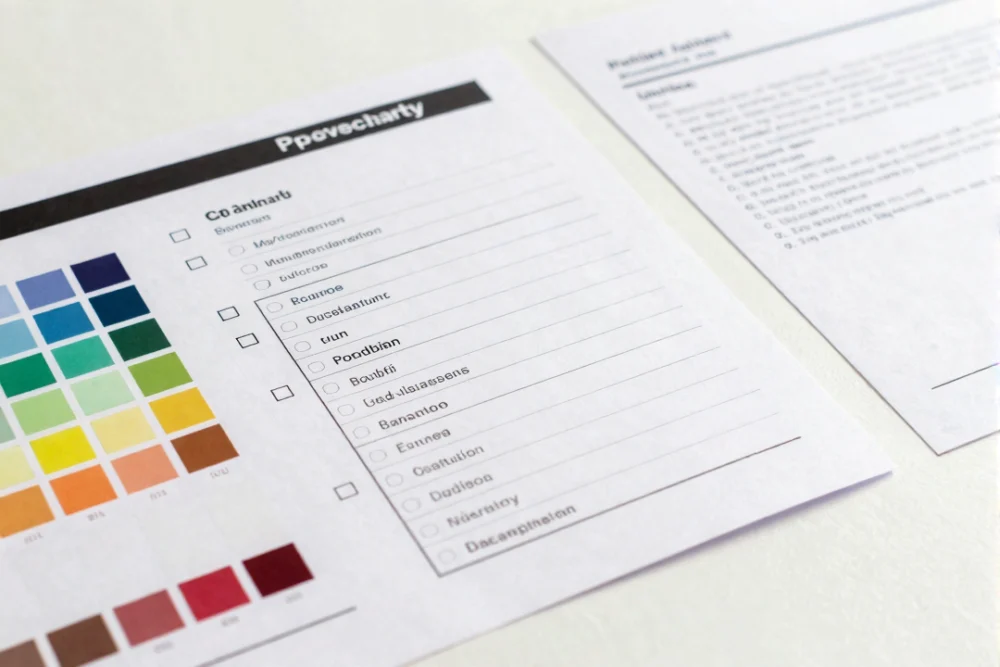
A clean checklist with CMYK swatches and bleed guides highlights print-ready file steps
Frequently Asked Questions
How fast can I get business cards printed in Deira, Dubai?
Turnaround depends on method and quantity. Digital printing is the fastest and can be ready in 24 hours for many standard jobs. Some providers list same-day delivery for 100 cards, 24 hours for 250 cards, and 2 to 3 days for 500 cards, with flexible timelines for 1000+. For business card printing dubai deira, confirm exact timing with the printer.
What print-ready file specs should I use for business cards?
Use CMYK color mode, 300 dpi resolution, and include at least 3 mm bleed or 0.125 inches on all sides. Keep text inside the safe area, convert fonts to curves, and export as PDF/X-1a or PDF/X-4. For spot UV or foil, supply a separate 100% K spot layer.
Digital vs. offset vs. letterpress: which is best for business cards?
Digital printing suits short runs and urgent reprints. Offset printing works best for bulk orders, often 500+ cards, and delivers consistent quality at scale. Letterpress is a premium option with a deep impression and scheduled delivery. Choose based on your quantity, timeline, and the feel you want.
What business card thickness should I choose?
Standard cardstock is typically 14 to 16 pt and works well for everyday networking. Luxury cards are often 30+ pt, around 350 to 600 gsm, and feel more premium. Thicker stock feels higher-end but costs more, so match thickness to your audience and how often you hand out cards.
Which finish is best if I need to write on the card?
Matte and soft touch finishes are easiest to write on. Gloss UV provides strong color and scuff resistance, but it resists most pens and markers. Spot UV and foil work best as accents rather than full coverage. If writing is important, avoid full gloss surfaces.


