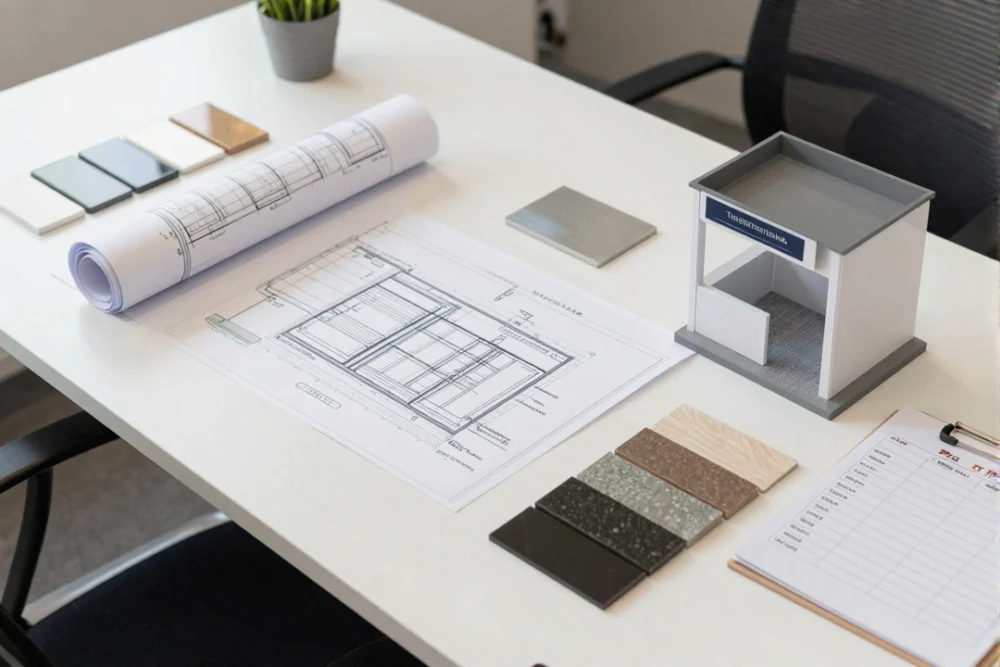
A tidy workspace with kiosk drawings, material swatches, and a small model representing a compliance-first workflow
Start Smart With Compliance
kiosk branding dubai becomes profitable faster when approvals, safety, and storytelling move together from day one. A compliance-first mindset keeps layouts halal, protects investor capital, and makes mall reviewers your allies instead of bottlenecks. Once permits are secured, the branding team can invest energy into finishes, lighting, and shopper journeys instead of rework.
Key Takeaways
- Mall authorities expect complete approval files with layout drawings, DED trade licenses, and proof that layouts never interfere with safety gear.
- Modern minimalist kiosks with LED logos, glass showcases, and premium palettes mirror Dubai Mall expectations.
- Durable mixes of aluminum, MDF, acrylic, and vinyl wraps stand up to nonstop traffic without straining budgets.
- Layouts must respect 3×3 or 4×4 footprints and keep bestsellers at eye level without blocking aisles.
- Select a vendor who handles renders, mall liaison, MEP coordination, installation, and post-launch upkeep.
Think of approvals as the backbone of retail kiosk branding dubai: once layout drawings, trade licenses, and safety clearances are secured, the branding team can focus on durable finishes, clean storytelling, and measurable sales lifts. The winners are the kiosks that combine regulatory discipline with standout wraps, illuminated signage, and modular fixtures built for constant customer flow.
Adopt A Compliance-First Workflow
Secure Mall Permissions Early
Mall kiosk branding dubai projects begin with permission, not printing. Submit a full concept pack—plan view, elevations, renders, and lighting diagrams—before you fabricate a single panel. Each document shows how branding respects fire sprinklers, exit sightlines, and head clearances. Include a valid DED trade license, electrical load schedule, and a material board that clarifies every finish from wrap vinyl to glass tint. Mall reviewers then see that your wraps, stickers, and suspended logos stay within the size and color limits recorded in their manuals.
Build a compliance tracker that lists every required document, responsible owner, submission date, and approval status. Simple spreadsheets or project boards keep mall requests visible, especially when multiple teams are designing wraps, sourcing fixtures, and preparing POS gear at the same time.
Pro tip: Schedule a weekly check-in between your designer, project manager, and mall liaison. Reviewing outstanding questions in one call prevents quiet delays that can stretch approvals by weeks.
Request The Latest Guidelines
Guidelines shift as malls roll out new tenant mixes, repair programs, or safety upgrades. Request the most recent kiosk manual before committing to any kiosk wrap dubai concept. Confirm footprint limits, maximum branding heights, acceptable lighting temperatures, and cable routing rules. Align every dimension—platform height, sneeze-guard height, TV mounts—with those standards to avoid redesigns.
Experienced teams usually secure approvals in roughly one to three weeks when drawings match the template and include mall-requested forms. Submitting incomplete packages can double review times because the mall must recheck each resubmission. Stay proactive by logging every reviewer comment and closing each action with a written confirmation.
- Document every submission and approval response for audit-ready records.
- Assign a single liaison to answer mall clarifications quickly and keep messaging consistent.
- Plan a buffer in your schedule to absorb inevitable drawing updates, especially around electrical routing.
Align Design With Dubai Mall Luxury
Mirror The Mall’s Aesthetic Language
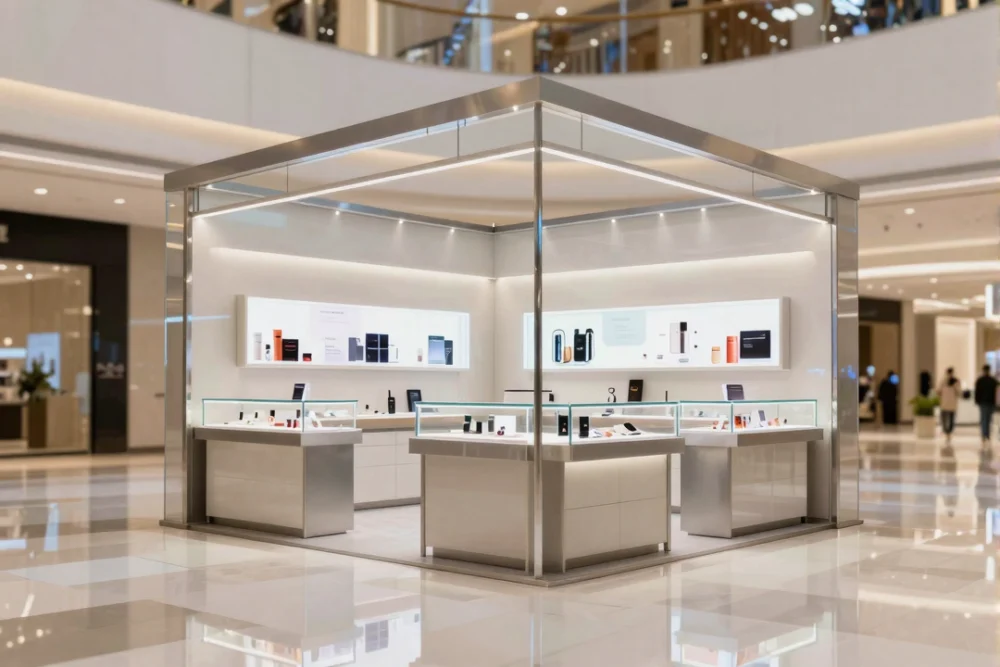
The Penbo Display case study proves that precision pays. Their 3m x 3m kiosk used a white-and-silver palette, LED-lit overhead logo, glass showcases, and hidden cable conduits to match Dubai Mall’s luxury tone. Follow that lead with detailed 3D renders so mall teams can visualize how surfaces, lighting, and product displays look before fabrication. Remove clutter on countertops, keep digital screens recessed, and use consistent metal trims so the kiosk reads like a freestanding boutique rather than a pop-up booth.
When planning storytelling, define one hero zone per face of the kiosk. Use tiered heights to guide shoppers from an illuminated logo to top-seller showcases, then to impulse bins or service counters. Consistency across all faces helps mall reviewers confirm that branding messages support the mall’s premium standards.
Use Lighting To Tell The Story
Lighting is both functional and regulatory. Combine LED cove lighting to wash back walls, spotlighted shelves to highlight hero SKUs, and interactive projections or small screens to tell new product stories. Integrate charging pads or touchscreens only after verifying that electrical hookups meet the mall’s safety specification. Every lighting element needs a maintenance plan: note replacement lamp types, access panels, and cleaning intervals so technicians can swap parts without dismantling wraps.
Need inspiration for compliant sticker systems? Review the sticker solutions for Dubai shopping malls guide to see how layered graphics stay bold yet minimal without violating sightline rules.
Specify Durable High-Traffic Materials
Balance Luxury And Maintenance
Premium kiosks only stay premium if materials survive constant handling. High-quality glass, wooden bases, and metal trims create a permanent feel, but they need scratch-resistant coatings and clear cleaning SOPs. Creative Roots recommends lightweight aluminum frames, MDF cladding, acrylic display cases, and vinyl wraps for an agile, repairable build. These combinations deliver a sleek appearance while keeping replacement costs manageable.
Combine those materials with precise joinery. Tight seams, hidden fasteners, and concealed storage keep surfaces clean and reduce snag points where wraps might lift. Train staff on daily wipe-down routines and weekly inspections so small scuffs or chips are repaired before mall teams flag them.
Use Modular Components And Smart Tech
Modularity is the fastest route to fresh storytelling. Use counters and shelving that can be swapped without tearing up electrical lines. Foldable or stackable displays simplify transport to seasonal events or holiday zones. Integrate tablets, QR codes, and slim LED signage so promotions can change instantly without bulky hardware.
To keep wraps vibrant, partner with a vinyl sticker printing in Dubai specialist who understands mall-approved adhesives and lamination types. Modular wraps and detachable panels let you refresh graphics overnight, so the kiosk always feels new even when the structure stays the same.
- Choose acrylic cases for a glass-like appearance without the weight or breakage risk.
- Use hidden cabinets under counters to store restock units while keeping sightlines open.
- Schedule quarterly inspections to catch peeling edges, dull LEDs, or loose fasteners.
Plan Flow, Visibility, And Placement
Respect Footprint And Accessibility
Malls often provide 3×3 or 4×4 meter footprints, so every centimeter must work. Design counters that curve or angle to keep traffic moving around the kiosk perimeter. Maintain ADA and universal access clearances by leaving at least one straight-through path with unobstructed turning space. Place bestsellers at eye level, and keep digital screens below the height where they could block anchors or signage for nearby stores. Mall inspectors will request immediate removal of any kiosk sticker branding dubai element that protrudes into walkways or blocks views of their directional signage.
To plan for accessibility, mark all door swings, pop-up trays, and demo tables in your layout drawing. Provide photos or renders showing how staff interact with customers to prove that the kiosk will not cause congestion. When presenting to mall management, describe how customer service stations allow privacy for transactions while maintaining sightlines for security cameras.
Pick Strategic Locations
Placement near entrances, escalators, or food courts drives awareness only when the layout stays open and legible. Study mall-supplied traffic data and observe peak patterns yourself. Identify zones where your target demographic naturally gathers, then note potential pinch points such as seasonal displays or queueing areas. Use consistent signage and wraps on every face so a shopper approaching from any direction sees the same message.
Incorporate wayfinding cues into your wraps—arrows, contrasting bands, or layered stickers can guide eyes to hero products. When evaluating sightlines, imagine how travelers searching for services near me in Dubai would spot your kiosk amid the crowd. Choose lighting temperatures that match neighboring stores so your kiosk feels like part of the environment, not an outlier.
For detailed wrap planning, borrow ideas from the guide to sticker printing materials so each substrate matches the ambient lighting and humidity of your assigned zone.
Qualify Turnkey Vendors
Use A Structured Checklist
Dubai Mall projects demand partners who understand both creative direction and compliance paperwork. Build a vendor checklist that evaluates concept skills, project controls, and aftercare support. Confirm that candidates can provide 3D renders, detailed drawing sets, and MEP coordination packages. Ask for proof of mall experience, especially at Dubai Mall or similar premium environments, because seasoned teams already know submission portals, reviewer preferences, and installation time windows.
Interrogate their production process. Do they have QA inspections at multiple stages? Will they mock up wrap seams before final printing? Can they manage sourcing, shipping, installation, and commissioning without external contractors? Ensure quality materials and LED systems are part of their standard scope, and verify that they offer maintenance or rapid repair services after handover.
Leverage Experienced Partners
Penbo Display demonstrates how turnkey expertise shortens timelines: they led discovery, produced 3D renders, fabricated high-quality glass cases, integrated LED lighting with charging stations, and delivered a kiosk that satisfied Dubai Mall inspectors on the first pass. Exotic Interiors Studio shows the value of combining design talent with mall liaison skills, handling approvals across major UAE malls.
Providers like GFX Printer offer kiosk signage dubai support when you need premium graphics that already follow mall specs, ensuring adhesives, finishes, and colors stay within the approved palette. Always request references, sample inspection reports, and escalation paths before signing contracts so you know who will resolve issues if an approval hiccup or shipping delay arises.
Need fabrication support tailored to kiosks? Explore retail kiosk printing resources to understand how structural branding integrates with wraps, signage, and lighting components.
Map Execution Timeline And Risks
Follow A Repeatable Timeline
- Discovery: Interview stakeholders to lock audience, SKU mix, and compliance expectations. Document must-have features early so designers can plan electrical and storage needs.
- Design: Build 3D renders, elevations, and wrap layouts aligned with the latest guidelines. Reserve time for feedback loops with both the client brand team and mall reviewer.
- Submission: Deliver drawings, material boards, and trade license copies to mall management. Include technical sheets for lighting, glazing, and adhesives.
- Approval: Expect roughly one to three weeks when documents match the template. Respond to feedback quickly and track revisions by version number.
- Production: Source approved materials, fabricate modules, and assemble electrical systems within the workshop, keeping a photographic log for future reference.
- Quality Control: Conduct inspections that cover structural integrity, finish consistency, lighting function, and wiring safety. Document punch lists and close-out evidence.
- Logistics: Ship modules with protective crating, including spare wrap panels and lighting components. Coordinate mall access windows with security for overnight installation slots.
- Installation: Assemble on-site, connect utilities, and invite mall inspectors for final sign-off before stocking products.
- Handover: Train staff on maintenance, cleaning, emergency procedures, and compliance documentation so every shift understands the approved scope.
Attach risk triggers to each stage. For example, if approval exceeds the planned window, have a fast-response design team ready to adjust drawings within 48 hours. During production, keep spare materials on-site so a damaged panel does not halt installation. A well-documented timeline also helps mall teams trust that you can meet blackout dates or seasonal launches.
Mitigate Top Risks
Unauthorized modifications, missing permits, or untested electrical work can trigger shutdowns. Create contingency plans for each common risk:
- Approval gaps: Host a weekly compliance review with the mall liaison to confirm all changes stay within approved scope.
- Material defects: Maintain a small stock of spare aluminum extrusions, acrylic panels, and wrap prints for emergency swaps.
- Electrical surprises: Conduct load tests in the workshop and document breaker requirements so mall engineers sign off faster on-site.
- Communication lapses: Keep a shared log of change orders, clarifications, and sign-offs so every stakeholder sees the latest instructions.
By logging these actions, you demonstrate to mall management that branding updates remain controlled, documented, and aligned with the original approval.
Track Branding Impact
Measure Engagement And Sales
The Penbo Display kiosk won steady traffic because its design linked aesthetic excellence with useful charging stations. Recreate that feedback loop by capturing baseline sales before the upgrade, then track weekly POS reports afterward. Use discreet sensors or staff observations to log dwell times near hero displays. Tablets or QR surveys can collect quick shopper impressions about layout clarity, lighting, and service speed. Feed these metrics into your next wrap update so every revision has measurable goals.
Share highlights with mall management—proof of traffic growth or customer satisfaction reinforces that the kiosk is an asset to the mall environment. Keep these reports simple: a one-page dashboard with footfall, conversion rate, and maintenance status is enough to show discipline.
Use Data To Refine Locations
Combine footfall analytics from the mall with your POS data to see which kiosk faces convert best. Update messages seasonally to match mall events, rotate products into the hottest zones, and keep wraps immaculate so safety inspections stay smooth. Synchronize banners, digital screens, and social content so shoppers recognize the story before they reach the kiosk. Consistent visuals build trust and increase the chance that passersby stop to engage.
For sticker-heavy launches, study the custom sticker printing guide to align materials, finishes, and layering techniques with the lighting and humidity conditions of your chosen zone.
References
- Case Study: Custom Cell Phone Accessories Kiosk for Dubai Mall ? Penbo Display ? 2025-04-16 ? Penbo Display
- Checklist for Setting Up a Kiosk in a Dubai Shopping Mall ? LinkedIn (Exotic Interiors Studio) ? 2025-08-15 ? Exotic Interiors Studio Checklist
- How to Build a High-Impact Kiosk on a Budget ? Creative Roots ? 2025-02-10 ? Creative Roots Guide
- Mall Kiosk Regulations in Dubai ? Index Design ? ? Index Design Regulations
- How to Pick the Best Mall Kiosk Location ? Index Design ? ? Index Design Location Tips
- Emaar Tenant Manual – Dubai Mall ? Scribd ? ? Emaar Tenant Manual
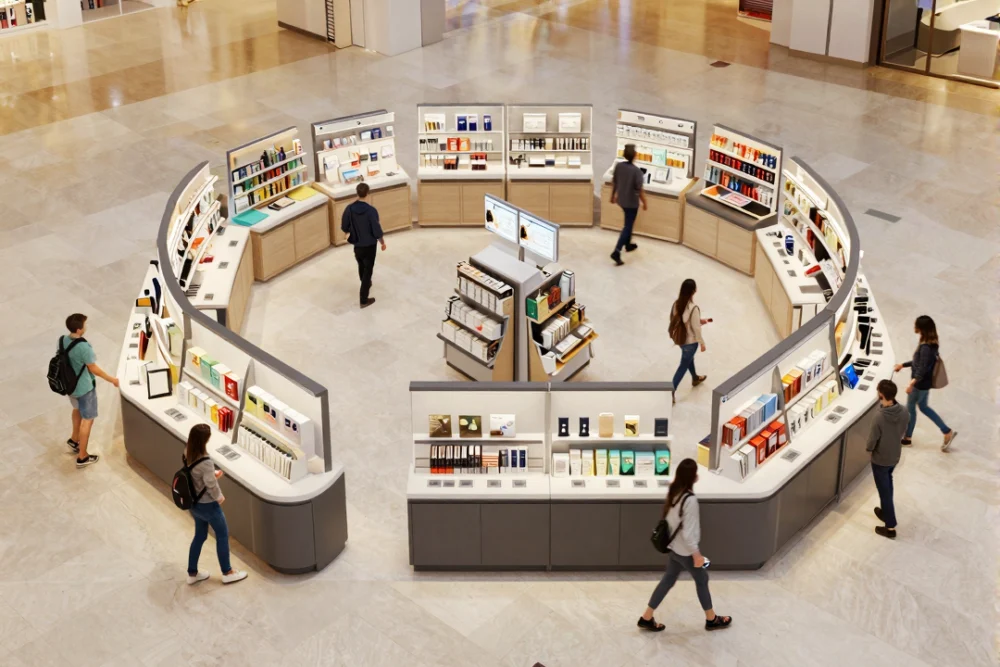
A mall kiosk layout with curved counters, open walkways, and eye-level displays that support smooth pedestrian flow
Frequently Asked Questions
What approvals are required for a mall kiosk in Dubai?
You need initial approval from mall management for the layout and concept. A valid DED trade license is mandatory. For F&B kiosks, health and safety approvals are required. Malls also review branding, layout, and utility access to confirm compliance.
What kiosk size do Dubai malls usually allow?
Research reports that many malls use a standard footprint of 3x3m or 4x4m. Exact limits depend on the mall’s latest kiosk guidelines, so always request the current manual before you finalize any retail kiosk branding dubai layout.
What branding rules do malls enforce for kiosk signage?
Malls expect branding to follow their design standards and approval process. Logo size, color, and lighting must fit mall rules. Wraps, stickers, and signage need mall approval, and branding must not block safety gear, sightlines, or customer flow.
What materials are practical for high-traffic kiosks in Dubai malls?
Research suggests durable, budget-aware options like lightweight aluminum, MDF panels, acrylic display cases, and vinyl wraps. These materials handle frequent use, are easier to repair, and keep the look clean without the cost of heavy, premium materials.
How long do kiosk approvals take in Dubai malls?
One source says approvals can take about 1–3 weeks with a professional design team and complete documents. Delays happen when designs miss mall guidelines or required forms. Not specified in the research for exact timelines by mall.
How should kiosk layouts handle customer flow and safety?
Layouts should keep aisles clear and support accessibility. Place bestsellers at eye level and avoid blocking pathways or sightlines. Kiosk placement should not create safety hazards or interfere with pedestrian movement, which is a key requirement for kiosk branding dubai.


